
Services and Specialties
CBT for Anxiety & Stress Relief
Structured, supportive CBT for calmer days and clearer thinking.
Anxiety doesn’t always look like panic. It can show up as overthinking, irritability, perfectionism, or the feeling that your mind is always running in overdrive. Left untreated, chronic stress and anxiety can chip away at your confidence, drain your energy, and interfere with work, relationships, and sleep.
At Catalyst Psychology, we help adults develop tools to manage anxiety at the root—so you can feel more grounded, resilient, and in control of your life.
Our approach is based in Cognitive Behavioral Therapy (CBT), a proven, practical method that helps you identify unhelpful thought patterns, practice new responses, and reduce the intensity and frequency of anxious symptoms.

What Makes Our Approach Different
We specialize in evidence-based therapy that’s active, personalized, and built for real change. Anxiety doesn’t go away by simply talking about it. It improves when you understand what drives it and learn what to do differently.
No two people experience anxiety the same way. We tailor your treatment plan to your symptoms, personality, lifestyle, and goals. Whether your anxiety feels generalized, performance-based, social, or panic-driven, we meet you where you are.
We draw on research-backed techniques like cognitive restructuring, attentional control, behavioral experiments, and emotion regulation strategies—so you’re not just coping, you’re learning skills that stick.
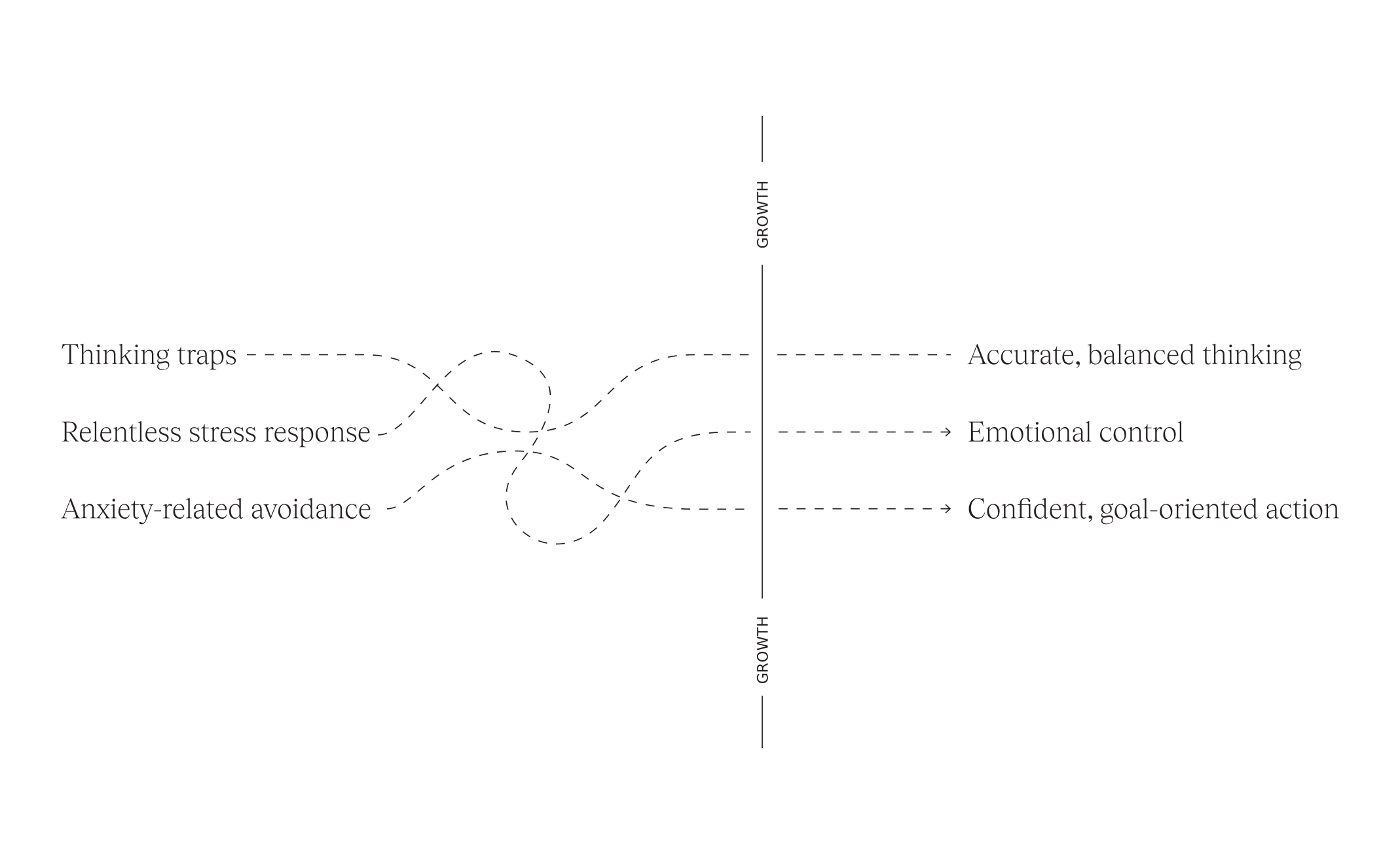
What You Can Expect from Therapy
After working with Catalyst Psychology, many clients report:
01
A greater sense of calm and mental clarity
02
Fewer cycles of rumination, worry, or emotional reactivity
03
Better sleep, focus, and stress tolerance
04
More control in high-stakes situations at work, school, or home
Who We Help
Catalyst works with adults whose anxiety shows up in different ways, from constant worry and overthinking to avoidance, perfectionism, stress, and difficulty feeling at ease. Our work is structured, collaborative, and focused on helping you respond differently in daily life.
When Anxiety Takes Up Too Much Space
You may look steady on the outside while spending enormous energy managing worry, pressure, or uncertainty internally. CBT helps you understand the anxiety cycle and build new responses.
Make sense of the patterns keeping anxiety active
Reduce the time and energy spent anticipating, checking, or second-guessing
Practice responding differently to worry, uncertainty, and physical anxiety
Build more steadiness in the moments anxiety usually takes over
When Your Mind Will Not Slow Down
Overthinking can feel productive, but it often keeps you stuck in the same loop. Therapy helps you notice when thinking has stopped helping and practice shifting back toward what matters.
Work with rumination, mental reviewing, checking, and reassurance-seeking
Learn how to step out of loops without needing perfect certainty
Reduce the pull to rehearse, replay, research, or solve everything internally
Create more room for rest, focus, presence, and action
When Avoidance Starts Running the Show
Anxiety often narrows life quietly. It can shape what you say yes to, what you avoid, how much you prepare, and how hard it feels to move forward. CBT helps you build more flexibility and momentum.
Identify avoidance patterns that keep anxiety in place
Approach decisions, conversations, tasks, and responsibilities with more clarity
Build tolerance for discomfort without letting anxiety choose the path
Move toward work, relationships, goals, and values with greater confidence
Evidence-Based Tools We Use
+CBT for anxiety
Learn to identify and change patterns that keep anxiety in motion
+Behavioral frameworks
Practice new approaches to feared or avoided situations
+Cognitive restructuring
Build flexibility and build new perspective in your thinking
+Emotion regulation and stress reduction
Increase resilience and reduce excess stress response
+Attentional control
Train the brain to break unhelpful spirals of worry and fear
Frequently Asked Questions About CBT for Anxiety & Stress
What types of anxiety does CBT help with?
CBT is effective for generalized anxiety, social anxiety, panic symptoms, performance anxiety, work-related stress, perfectionism, and chronic worry or overthinking. These challenges may be long-standing or may emerge during major life transitions. At Catalyst Psychology, we focus on understanding what drives your anxiety, whether it shows up as racing thoughts, irritability, avoidance, or difficulty sleeping, and tailor tools that address the specific patterns that keep it going.
How long does CBT for anxiety usually take to work?
CBT for anxiety is a structured, goal-oriented approach tailored to your specific concerns and priorities. Rather than following a preset timeline, treatment is guided by your goals, how symptoms respond over time, and what emerges as therapy progresses. Progress is reviewed regularly, and the treatment plan is adjusted as goals are met, refined, or expanded.
Many clients begin noticing meaningful changes—such as reduced daily stress, greater clarity, or improved emotional steadiness—as they start applying strategies between sessions. Many clients report meaningful improvement towards treatment goals after 15 to 20 sessions.
What happens during CBT sessions for anxiety?
Each session includes a mix of learning tools, practicing strategies, and understanding the patterns behind your anxiety. You might review recent triggers, map out thought–emotion cycles, build coping skills, or plan small behavioral experiments to reduce avoidance. Sessions are collaborative and practical, aimed at helping you feel steadier and capable in daily life.
Does exposure play a role in anxiety therapy?
Exposure can be an important part of CBT when avoidance keeps anxiety in place. We introduce exposures gradually and collaboratively, using them to help you build confidence, flexibility, and a calmer response to situations that previously felt stressful. Many clients at Catalyst report that exposure increases their sense of control and ease in daily life.
Can CBT help if my anxiety is tied to stress, burnout, or perfectionism?
Yes. Anxiety often overlaps with chronic stress, overwork, and high personal expectations. CBT helps you understand the patterns that fuel these cycles and build more sustainable ways of working, relating, and resting. In fact, CBT can be particularly effective for people who describe their anxiety as “constant mental pressure,” as well as for those experiencing panic symptoms.
Is my anxiety “bad enough” for CBT, or should I wait until it gets worse?
You don’t have to wait for anxiety to feel overwhelming before starting CBT. Many people come in when anxiety is interfering with sleep, focus, confidence, or daily routines. CBT works well whether symptoms are mild, moderate, or more intense. If you’re noticing that anxiety is getting in the way of your life, that’s enough to begin.
CBT for Anxiety & Stress
Anxiety can feel like it’s in control—clouding decisions, draining energy, and amplifying self-doubt.
Here’s what our clients say after targeted CBT:

I’ve learned how to calm my body and think more clearly. The thought skills have been a game-changer—especially at work.”

Worry used to take up so much space in my mind. Now it just… doesn’t.”
Overthinking doesn’t control me anymore, I didn’t think this was possible.”

I’ve learned how to calm my body and think more clearly. The thought skills have been a game-changer—especially at work.”
I spent three years in therapy before coming to Catalyst, we made more progress in 25 sessions than I did in 75 sessions elsewhere.